22 June 2026
Working together to keep Britain’s energy secure: joint Q&A with National Gas and NESO
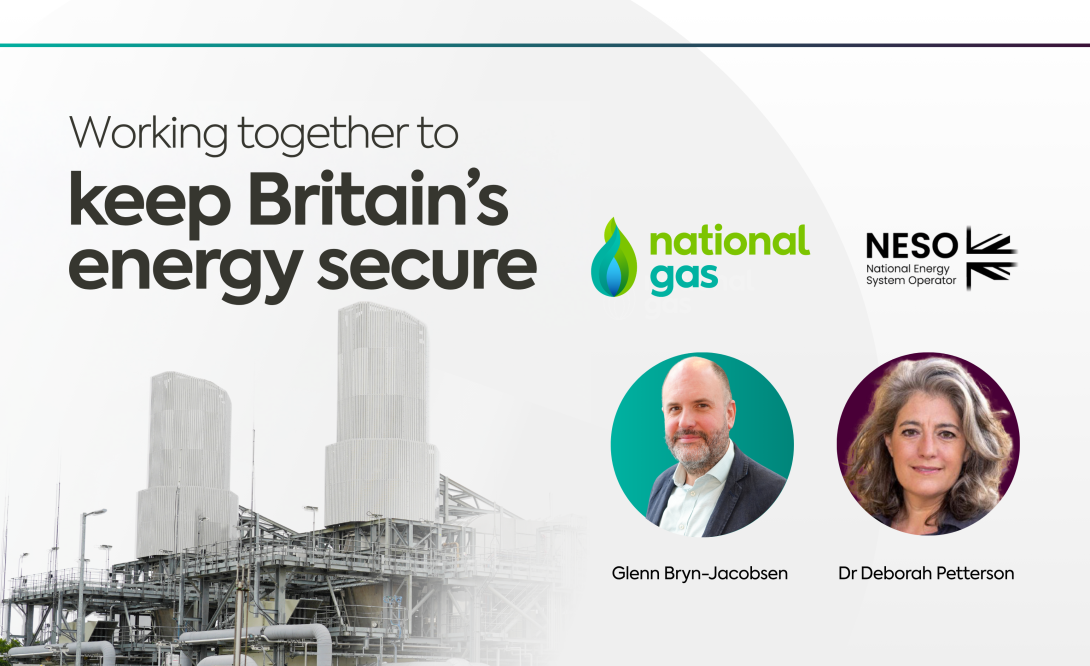
Keeping Great Britain’s energy system secure is no longer just about having enough supply. It requires careful, real-time management of a highly complex system.
No single organisation does this alone. It depends on the electricity and gas systems working together seamlessly every day.
In this joint Q&A, Glenn Bryn-Jacobsen, Director of Energy Systems and Resilience at National Gas and Dr Deborah Petterson, Director of Resilience and Emergency Management at NESO explain how that works in practice and what sits behind winter readiness beyond the headline numbers.
Q1. What roles do National Gas and NESO each play in keeping the system running day-to-day?
Dr Deborah Petterson, NESO: Our role is to operate Great Britain’s electricity system in real time, keeping supply and demand in balance every second of every day. We also look further ahead, planning for future challenges and ensuring the system is ready for changing conditions.
That means working closely with organisations across the energy sector, including National Gas. By sharing information and planning together, we can make sure the energy system remains secure and resilient both today and in the future.
Glenn Bryn-Jacobsen, National Gas: National Gas operates the National Transmission System, transporting gas safely across Britain, to continental Europe via the Bacton Interconnectors and to the island of Ireland via Moffat Interconnector.
Our role is to manage the physical network – maintaining pressures, balancing supply and demand in real-time, and ensuring the key market frameworks operate effectively so gas is available where and when it’s needed.
Q2. How do National Gas and NESO work together in practice?
Deborah, NESO: Gas remains an important part of keeping Britain’s electricity system secure, so close coordination between NESO and National Gas is essential. We continually share operational information and forecasts, helping us build a common understanding of system conditions both now and in the future.
That shared picture allows us to anticipate potential challenges, make informed decisions and respond quickly as conditions change.
Glenn, National Gas: We maintain close operational coordination on challenging days and share information regularly to align our longer term forecasts and planning assumptions. This ensures decisions are based on consistent information and we can respond quickly to any changes on the network.
In addition to the day-to-day communications, we have convened various groups such as the Electricity and Gas Resilience Interactions Task Group where we are actively collaborating to find solutions for whole system challenges.
Q3. How has operating Britain’s energy system changed in recent years, and what is driving that change?
Deborah, NESO: Britain’s energy system is becoming more diverse, with more renewables, storage and flexible technologies. This creates opportunities, but also a more dynamic system to manage.
To respond, we have transformed how we operate. Activity in the control room has increased significantly, from around 35,000 instructions a year to more than 15,000 actions in a single day, supported by digital tools and automation.
Despite these changes, our focus stays the same: maintaining a reliable energy system. Gas continues to play an important role, which is why close coordination with National Gas remains essential.
Glenn, National Gas: The system has become more dynamic and less predictable. We’re seeing sharper swings in demand, particularly as gas plays a flexible role in supporting electricity generation when renewable output is lower. Last winter showed just how fast that can happen as gas-fired power generation ramped up from ~2.3GW to ~26.1GW in just 36 hours, the largest swing ever recorded. That’s a clear example of how fast the system now has to respond, and why flexibility is more important than ever.
At the same time, supply is becoming more diverse and increasingly influenced by global markets, something we have particularly observed with the delivery of LNG cargos. Together, these changes mean the network has to operate more flexibly and manage a much wider range of conditions than in the past.
Q4. How would you define “energy security”, and why is it such a critical focus?
Deborah, NESO: Energy security is national security – it underpins every part of modern life. We work closely with Government, Ofgem, network companies and industry partners to assess risks, strengthen resilience and prepare for a wide range of scenarios.
Our review of the North Hyde substation outage, which led to the closure of Heathrow Airport, highlighted the important interdependencies between energy, transport, telecommunications and other essential services.
We regularly test our response plans with National Gas and wider industry partners through emergency exercises, helping ensure we are prepared to respond effectively in a range of circumstances.
Glenn, National Gas: From our perspective, energy security is about ensuring the gas transmission system can operate safely and reliably across a wide range of credible stress scenarios – not just meeting demand in normal conditions, but sustaining operation through disruption, uncertainty, and rapid change.
That resilience rests on three elements: designing the system to defined standards, preparing for cross-sector stress events, and restoring capability quickly when disruption occurs. As the UK has become more import-dependent, with greater exposure to global markets and more variable supply-demand dynamics, the system now faces a different and more complex risk profile.
It is a critical focus because gas underpins both heat and power. Around 24 million homes rely on it, and it provides the flexibility that supports electricity security of supply – particularly during periods of stress. As a result, resilience in the gas system is foundational to wider national energy resilience.
Q5. When people think about “winter readiness”, what aspects of the system are less well understood?
Deborah, NESO: This week NESO publishes its Early Outlook for Winter 2026/27, providing an early assessment of system conditions, risks and uncertainties so industry and market participants can prepare well in advance of winter.
What is less visible is the scale of preparation that sits behind those assessments. Throughout the year we model tens of thousands of scenarios, covering different weather conditions, demand patterns and potential system events, to understand how the energy system would perform under a wide range of circumstances.
Britain has one of the most reliable electricity systems in the world, delivering 99.999% reliability. That resilience comes from careful planning, investment and the expertise of engineers and operators working across both electricity and gas to keep energy flowing.
Glenn, National Gas: Winter readiness is something we take extremely seriously. It starts well before the season begins, with extensive maintenance across the network and making sure both our assets and our customers’ facilities are safe, reliable and ready to respond. That includes an outage programme and testing all 60 compressors across 21 sites to ensure we can move gas efficiently around the network when it’s needed most.
But increasingly, it’s not just about preparation - it’s about how the system performs in real time. As demand becomes more variable and conditions change more quickly, readiness means being able to respond at pace, working closely across the whole energy system to keep Britain’s energy secure when it matters most.
Closing…
Winter readiness is about more than a single number. It depends on constant coordination across the whole energy system.
As the system evolves, partnerships such as those between NESO and National Gas will remain central to delivering reliable, clean and affordable energy for homes and businesses year-round.