
Project Union: East Coast
Project Union: East Coast is the first phase of National Gas’ ambition to create a 1,500 mile hydrogen transmission network across Great Britain, known as Project Union.
Learn more about Project Union
The first phase of the national hydrogen network
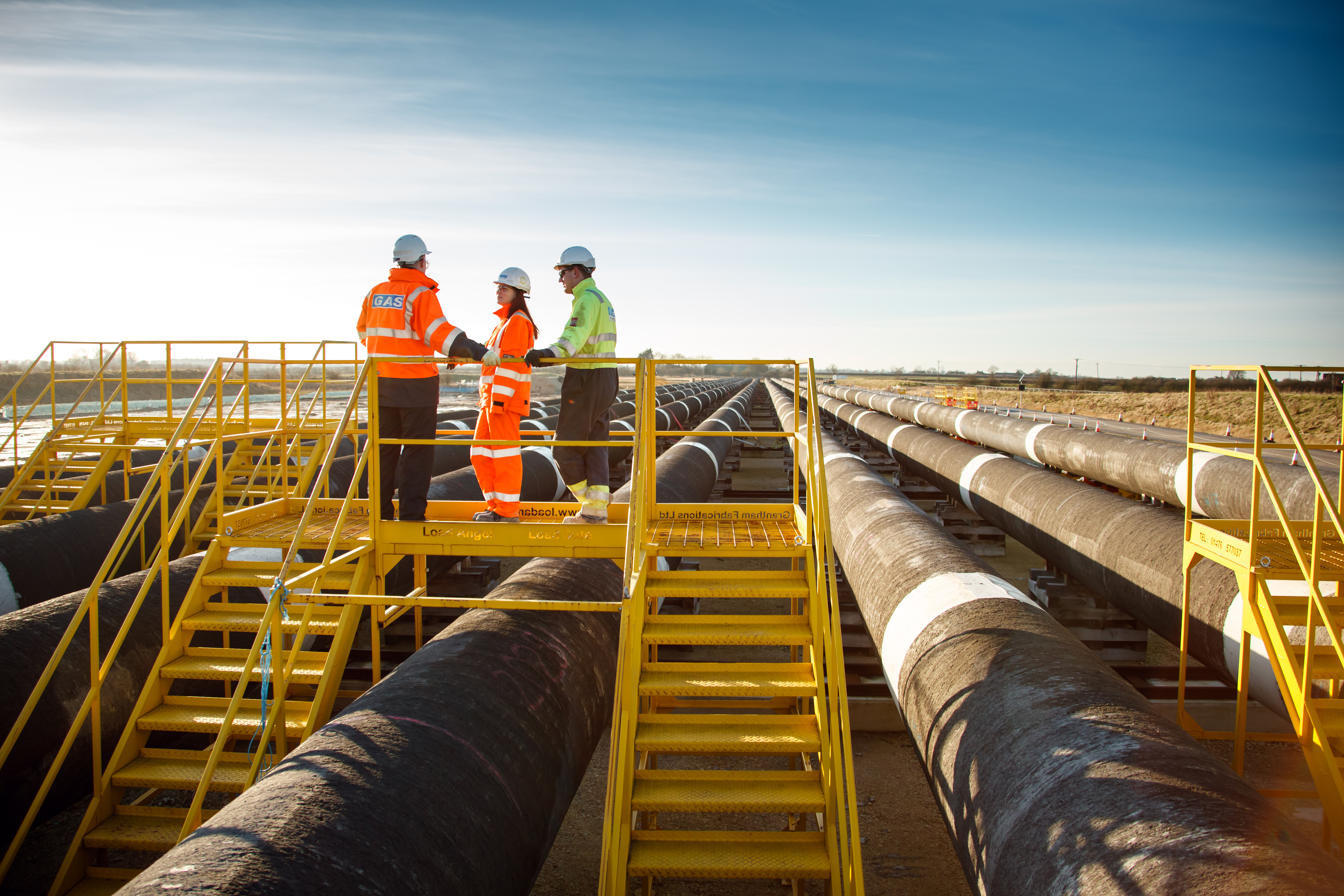
Through Project Union: East Coast, National Gas will create more than 300 miles of underground pipeline to connect some of Britain’s most important industrial regions and anchor the country’s emerging hydrogen economy.
It will also help meet the UK Government targets of net zero emissions by 2050 by enabling a transition to more home-grown, low-carbon energy for hard-to-decarbonise industries.
About Project Union: East Coast
The proposed route
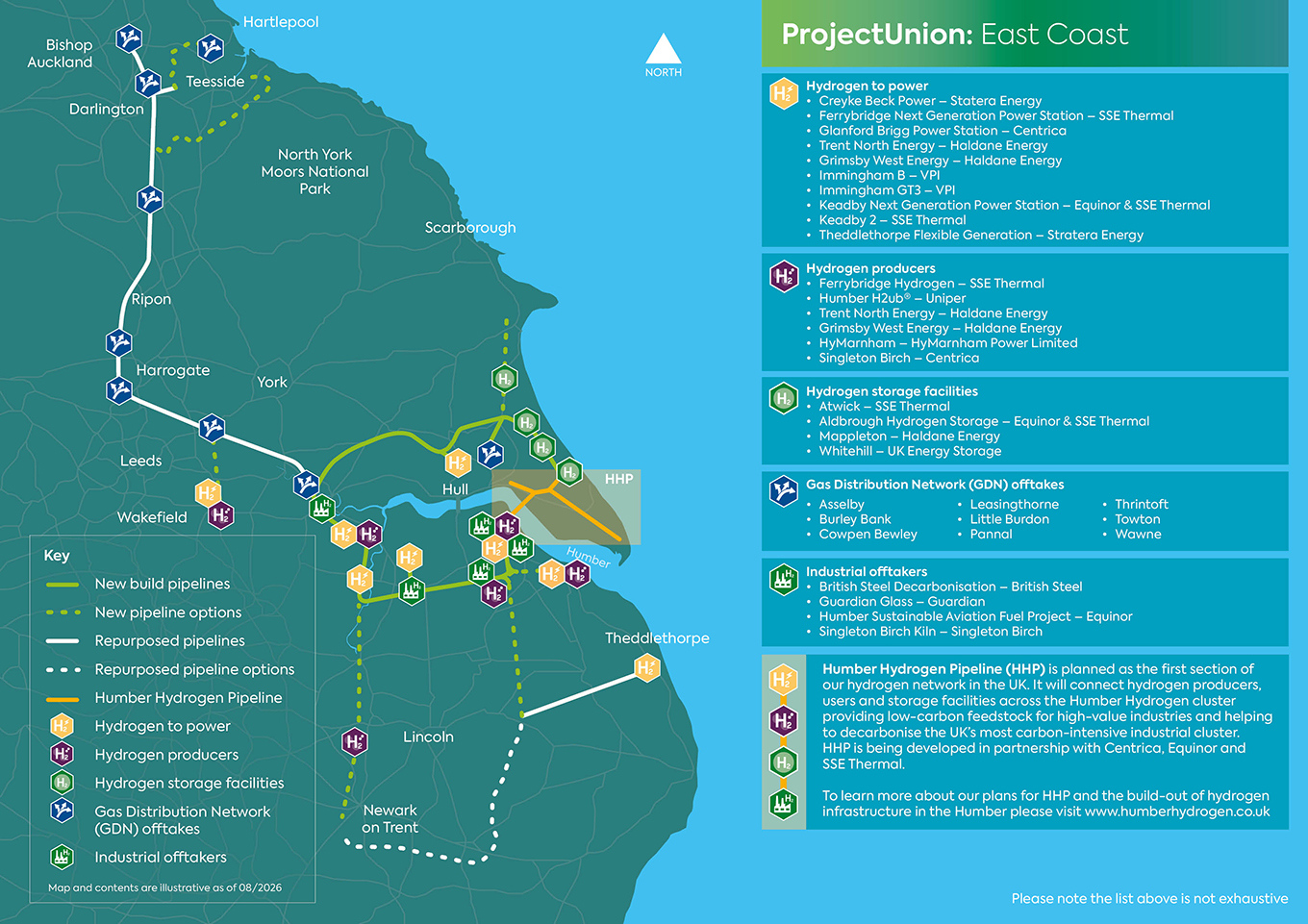
The proposed pipeline runs from Teesside, through Yorkshire and the Humber, then south to the East Midlands, following a route that connects major industrial areas across the East Coast of England.
The underground pipeline would be a mix of repurposed existing gas pipelines and new‑build sections.
The route is still being refined and will continue to evolve as surveys and consultation take place. Read more about how we are delivering Project Union: East Coast by clicking here.
Why the East Coast?
Teesside and the Humber are two of Britain’s largest industrial clusters and is where much of the country’s low carbon hydrogen is expected to be produced by 2030. With major industrial sites, power stations and large scale gas storage facilities already in place, it is the ideal location to pioneer a dedicated hydrogen network.
Project Union: East Coast will also connect with proposals for the Humber Hydrogen Pipeline, an initial pipeline network aiming to establish Britain’s first regional hydrogen cluster across Yorkshire and Lincolnshire, as part of Humber Hydrogen.
Together, these projects will help establish a connected hydrogen network across the region, leading the transition to cleaner energy and, helping industries switch from natural gas to low‑carbon hydrogen.
Ian Radley, National Gas Chief Commercial Officer
“This is a hugely significant moment in Britain’s energy transition and a clear signal of the real momentum behind the UK’s hydrogen ambitions. By setting out concrete plans for the first phase of the national hydrogen network, we’re delivering the infrastructure that will secure Britain’s place as a world leader in hydrogen."
“The East Coast is the natural place to start. It’s one of the Britain’s most important industrial heartlands with enormous hydrogen potential, making it the ideal region to begin developing a network that can then scale across the country."
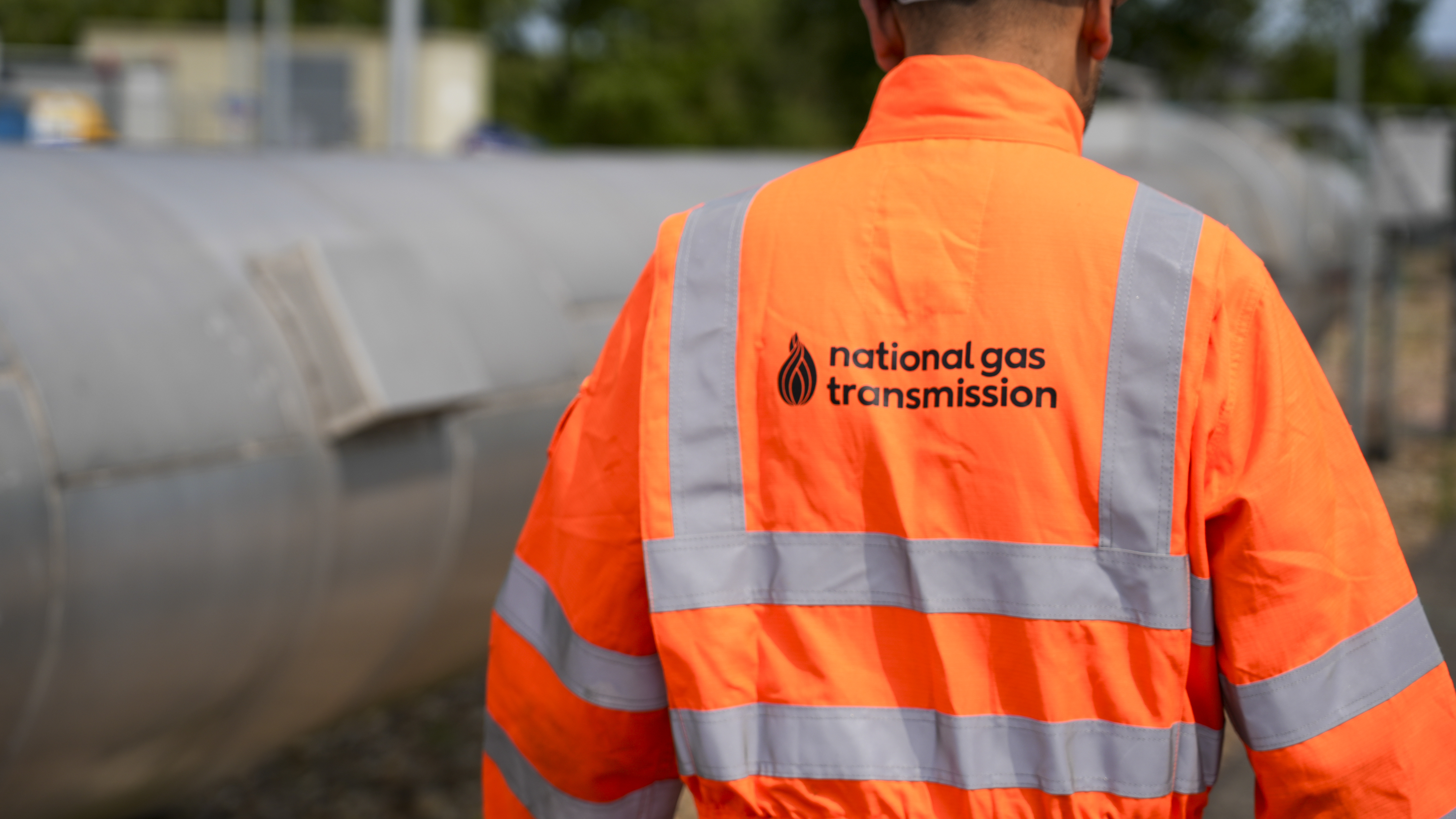
How the national hydrogen network will work
Project Union will combine:
- Repurposed gas transmission pipelines, reducing cost, disruption and environmental impact
- Newly constructed hydrogen pipelines to create key network links

- Above ground installations (AGIs) – specially designed sites acting as the connection hubs and control points of the hydrogen system
- Underground pipeline infrastructure, keeping the system safely out of sight once construction is complete
Together, these form a resilient transport network capable of moving large volumes of hydrogen to where it’s needed most.
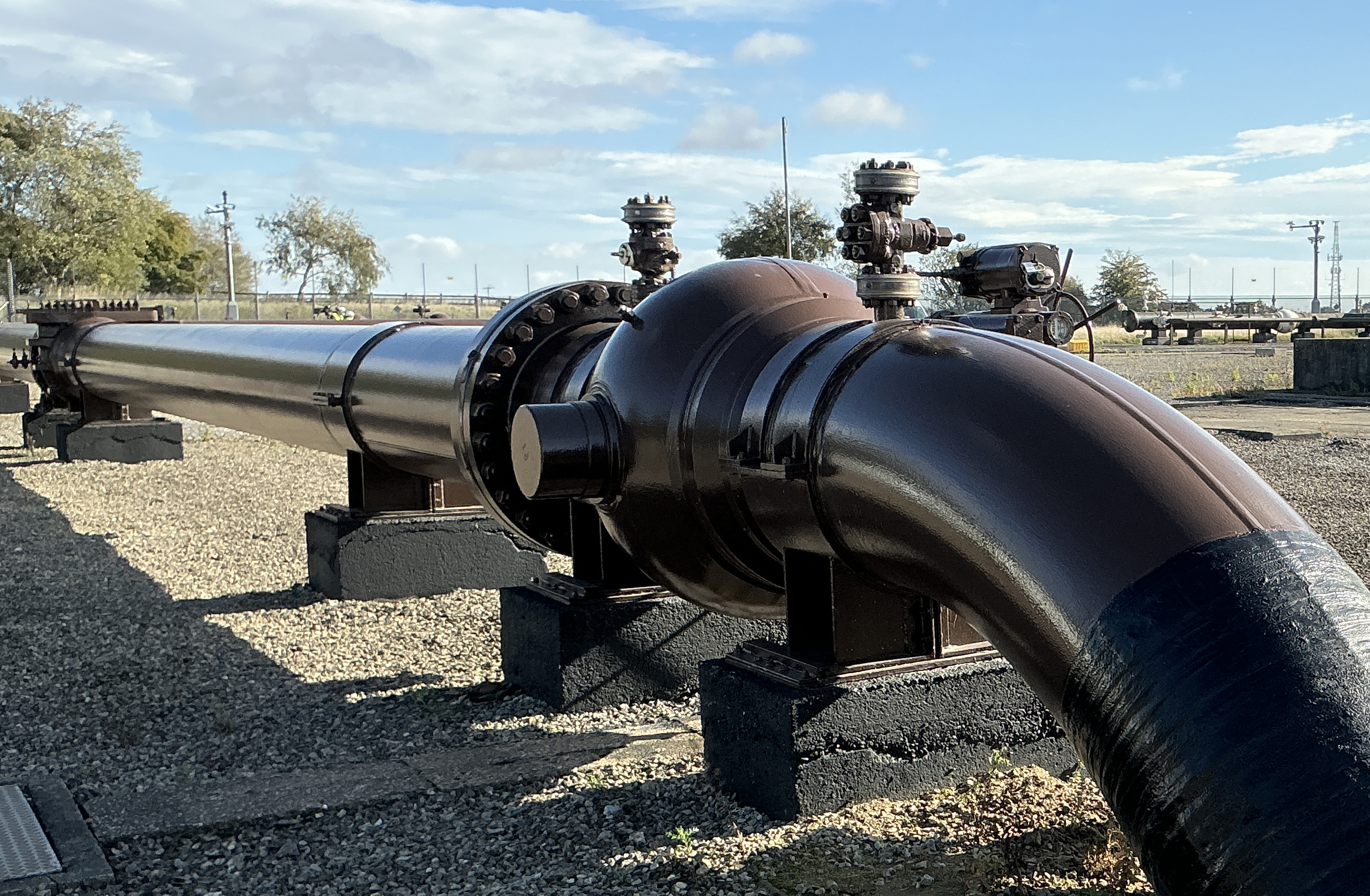
Above Ground Installations
While the network is predominantly underground, a small number of above ground installations (AGIs) are required. These sites allow us to:
- safely control and monitor the network
- connect industrial users
- support maintenance and resilience
- provide expansion capability for the future
We will work closely with communities to agree suitable locations and minimise environmental effects
Repurposed pipelines
This involves adapting parts of the existing natural gas network to carry 100% hydrogen.
- Reduces construction time, cost and environmental disruption, helping to accelerate delivery of the national hydrogen network
- Makes efficient use of the extensive national transmission system, drawing on decades of proven safety and reliability while minimising local impacts
- Provides a quicker, lower-carbon route to creating strategic hydrogen infrastructure, while supporting a smooth transition for industrial users connected to the existing NTS
Newly built pipelines
This involves installing new pipelines where repurposing isn't feasible.
- Ensures the network can reach key industrial, production and storage locations that are not currently served by existing infrastructure
- Offers flexibility to design routes optimised for capacity, resilience and future expansion, supporting long-term growth in hydrogen production and demand
- Allows National Gas to incorporate the latest materials, technologies and safety systems from the outset.
How Project Union: East Coast will power industry and support local communities
Connecting a growing hydrogen economy
Linking producers, industrial users and storage sites will create a fully integrated hydrogen ecosystem across the East Coast.
Bolstering UK energy security
Hydrogen produced here at home will reduce reliance on imported fuels and support the resilience of Britain’s energy system.
Boosting jobs, investment and long‑term industrial success
Hydrogen infrastructure will help protect existing jobs, create skilled new roles, and attract investment to the region.
Empowering local communities
National Gas is committed to working closely with communities, landowners and local authorities to shape the project and ensure it delivers a positive legacy - supporting skills, training and local supply chains.
Hydrogen: Powering a cleaner future

National Gas and the future of hydrogen in Britain
Safely moving gas for more than 60 years
National Gas owns and operates the 5,000‑mile National Transmission System (NTS) which has transported gas the length and breadth of Great Britain for more than 60 years.
Decades of investment and innovation have shaped our NTS into one of Europe’s safest and most dependable energy networks. Project Union builds on this legacy, and the next major step in National Gas’ evolution and in the transformation of Great Britain’s gas transmission system for a low‑carbon future.
FutureGrid
FutureGrid is a leading hydrogen test facility. Using decommissioned NTS assets, it allows us to test every part of a hydrogen transmission network in a safe, controlled environment - providing real‑world evidence to support repurposing existing NTS pipelines to transport hydrogen.
Clare Jackson, Hydrogen UK CEO
“Hydrogen UK welcomes the next phase of National Gas’s Project Union. Developing a hydrogen backbone is essential to unlocking investment, driving economic growth and supporting the reindustrialisation of the UK’s energy-intensive regions."
"By connecting hydrogen production with the industries that need it, infrastructure like this will help ensure British industry remains competitive in the global energy transition while strengthening the UK’s energy security.”
Working in partnership on the East Coast

Humber Hydrogen
Project Union: East Coast's underground pipeline connects into Humber Hydrogen, a partnership between Centrica, Equinor, National Gas and SSE Thermal that connect major production, storage and industrial demand centres across the region.
Click here to learn more
East Coast Hydrogen
Project Union: East Coast is part of East Coast Hydrogen, a collaboration between National Gas, Northern Gas Networks and Cadent to connect planned hydrogen production and storage with industrial users.
Click here to learn moreNavigation
Delivering the Project
Find out more about how we plan to deliver Project Union: East Coast.
Delivering Project Union: East Coast