
About National Gas

What we do

National Gas is the backbone of Britain’s energy system. We transport gas across Great Britain, repair and maintain gas pipelines, and manage the meters that allow power stations, businesses and millions of homes to access the energy they need. Our organisation comprises three National Gas businesses and Premtech:
- National Gas Transmission owns and operates the high-pressure national gas network (National Transmission System) that transports gas reliably to wherever it’s needed in Britain.
- National Gas Metering manages and maintains millions of traditional gas meters throughout Great Britain.
- National Gas Services provides nationally important emergency and planned pipeline repair and maintenance services to ensure the gas keeps flowing across the UK.
- Premtech provides multi-disciplinary engineering design services for high-pressure onshore pipelines and associated infrastructure.
We are Britain’s national gas network, providing secure energy to power the country, achieve net zero, and maintain our industrial competitiveness.
National Gas at a glance:
- 1,600+ employees
- 5,000 miles of pipeline
- More than 60 compressors at 21 compressor sites and more than 500 above-ground installations
Customers directly connected to the NTS:
- 3 LNG terminals
- 3 gas interconnectors (connecting with Belgium, The Netherlands and Ireland)
- 129 gas distribution offtakes
- 35 gas power stations
- 15 gas industrial users
- 9 gas storage sites

Find out more about National Gas, our industry and our responsibilities
Our leadership
Meet our Board of Directors and our executive leadership team. Our Board is responsible for strategic planning, overseeing safety and the delivery of our objectives. The executive leadership is responsible for ensuring gas is transported safely and efficiently from where it's produced to the places where it's consumed.
National Gas in the UK energy sector

As the owner and operator of Critical National Infrastructure – our National Transmission System (NTS) – National Gas has a key role to play in maintaining energy security for Great Britain and developing clean energy solutions to support the transition to net zero.
How we operate
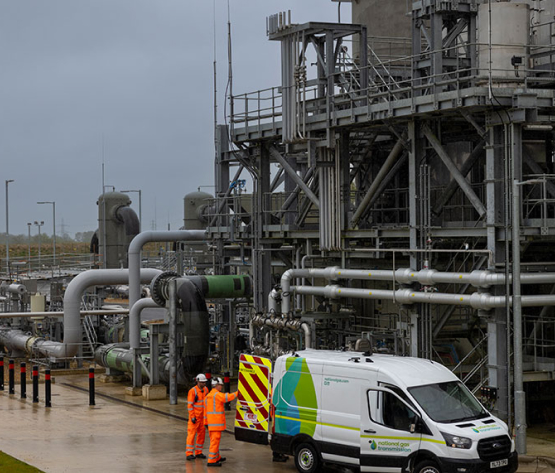
As owner and operator of the gas National Transmission System (NTS), we transport gas safely, efficiently and reliably across Britain. As System Operator, we are responsible for identifying the long-term needs of the network and our customers. As Transmission Owner, we ensure our assets are fit for purpose and safe to operate.

How we’re performing
Here you can find out about how we’re performing under our current business plans, including reliability, the environment, customer satisfaction, customer connections and, most importantly, safety.
Our History: National Gas
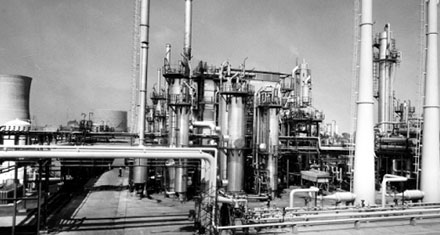
National Gas became a stand-alone organisation on 31 January 2023, when National Grid plc sold a 60% stake in its Gas Transmission and Metering business.
Find out more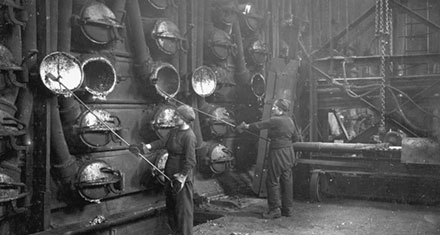
History of the UK gas industry
Step back in time: from the early days of manufactured gas through nationalisation and the nationwide conversion to natural gas through to privatisation.
Find out more
Our business
Get to know the businesses that make up National Gas, and find out more about our purpose, values and priorities.
Find out more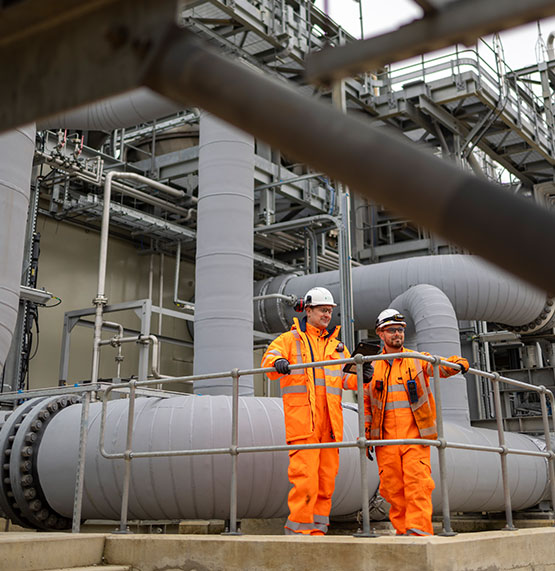
How we are regulated
National Gas is regulated by the energy regulator, Ofgem. As the owner of Britain’s national gas transmission network, we’re classed as a ‘natural monopoly’. The regulatory regime aims to simulate the effects of competition, ensuring we operate in the best interests of consumers.
More information about our role
About us: National Gas, GB Gas Transmission Owner and System Operator
National Gas owns and operates the National Transmission System (NTS) in Great Britain. Our licence obligates us to develop, maintain and operate an economic and efficient network as established under the Gas Act 1986. These obligations include facilitating competition in the supply of gas, maintaining system balance on the day, operating safely within pressure and gas quality limits, and planning and developing the network to meet peak demand against the established 1-in-20 demand standard.
The only formal security standard applied to supply of gas in Great Britain is the N-1 standard, as defined in Article 5 of the retained EU regulation 2017/1938. This N-1 standard, which is applied to the Secretary of State for Energy Security and Net Zero, is an infrastructure-based test that assesses whether the GB system has sufficient aggregate gas supply capability upstream of the NTS, to meet demand in the event of the failure of the single largest supply source. Importantly, N-1 relates to upstream supply capability. This includes upstream production (UK Continental Shelf), imports (EU and Norway), LNG and storage availability and deliverability. As such, it is a test of physical gas supply capability, rather than an assessment of the realistic maximum volume of actual gas that may be deliverable to the NTS on any given day. The overall availability of gas is expected to be ensured through market arrangements and commercial incentives, rather than through obligations on the System Operator. This separation between upstream infrastructure capability and the actual gas supply availability is well-established within the current regulatory and policy framework.
On the day, National Gas fulfils its role as residual energy balancer of the NTS through trading on the on-the-day commodity market, both title and physical gas, buying or selling gas as necessary to physically balance the system, and maintain system integrity within established ranges of pressure and volume across the network. This operational role requires visibility of supply conditions to manage any emerging system stress events and escalate risks, where appropriate. However, it does not place any accountability on National Gas for securing the availability or delivery of any upstream gas supply capability.
National Gas does not control upstream production, import capacity, storage levels or wider commercial supply decisions. Gas Shippers, as customers of National Gas on the NTS, are incentivised under the gas balancing regime and associated commercial framework agreements to balance their portfolios on any gas day. These incentives create the commercial environment within which shippers secure sufficient upstream gas supplies to meet their customers’ daily demand.
While National Gas does procure some physical gas supply through Operating Margins (OM) ahead of the day, this is only an operational tool, held in reserve, and available for release at short notice to support system integrity under defined stress scenarios. As opposed to a mechanism for securing a level of supply availability to balance the networks. Accountability for ensuring sufficient upstream supply capability therefore sits outside National Gas’s current Gas Transporter Licence and Uniform Network Code obligations.
Similarly, National Gas does not have an obligation to proactively reinforce the transmission network in order to secure upstream supply availability. Investment in transmission network infrastructure is typically undertaken where justified by an economic assessment of identifiable operability, or constraint risk, or where driven by a specific customer request. Such reinforcements, where approved by Ofgem, are therefore either the outcome of a cost benefit analysis linked to defined network risk, or are customer-led and subject to a Net Present Value (NPV) assessment and a long-term capacity commitment. Rather than mechanisms intended to ensure national gas supply adequacy.
Accordingly, although National Gas plays a critical role in identifying, managing and communicating risks to the operation of the gas system and is responding to this consultation on that basis, it does not hold accountability for securing the supply of gas to the GB market or securing sufficient upstream supply capability.

Governance
Our Board has overall responsibility for ensuring the long-term success of the business. Find out more about our Board Committees, steering groups and approach to risk mgmt.
Find out more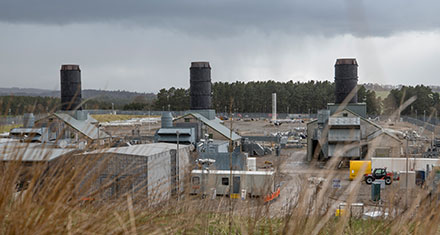
Our stakeholders
Stakeholders are any individuals or organisations that have an interest in or are impacted by what we do. Find out more about our stakeholder groups.
Find out more
Our suppliers
We’re keen to work with suppliers who can support our objectives. Learn about our expectations, sustainability policies and how to work with us.
Find out more